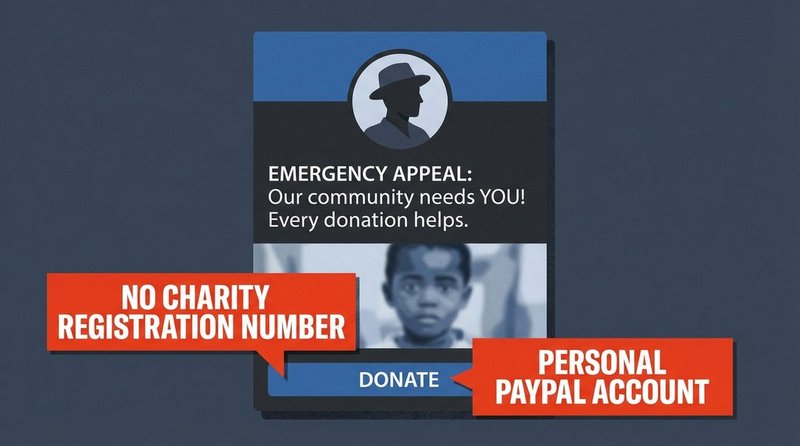
The charity was fake. The celebrity had no involvement. The PayPal account collected real money from real people who believed they were helping sick children. Fake charity scams using celebrity images are a documented, recurring fraud pattern — and one of the most emotionally manipulative forms of online deception.
The Claim
A Facebook campaign using photographs of a well-known celebrity — in documented cases, figures including Taylor Swift, Dwayne Johnson, and others — claimed to be raising money for children with serious illness. The posts featured professionally cropped celebrity images, emotionally charged copy about specific sick children, and a donation button or PayPal link directing funds to an unverified account. No charity registration number was provided. No organizational affiliation was listed.
How It Spread
Facebook’s algorithmic amplification of emotionally resonant content made these campaigns particularly effective. Posts featuring sick children and beloved celebrities generated high engagement — shares, comments, and reactions — which in turn pushed the posts to wider audiences before any moderation action occurred. The Federal Trade Commission (FTC) documented a significant increase in celebrity-image charity fraud cases from 2020 onward, correlating with the platform’s expanded donation features.
The FBI’s Internet Crime Complaint Center (IC3) annual reports have consistently flagged social media charity fraud as a growth category, with losses in the millions of dollars annually across documented cases. Victims skew toward older demographics with higher trust in celebrity endorsements.
The Truth
Legitimate charities in the United States are registered with the IRS as 501(c)(3) organizations and are searchable through the Better Business Bureau Wise Giving Alliance and Charity Navigator. None of the fraudulent campaigns in documented cases corresponded to registered organizations. The celebrities whose images were used had no knowledge of or involvement in the campaigns — their management offices confirmed this when contacted by journalists and fact-checkers.
The FTC’s charity fraud guidance explicitly states that legitimate fundraisers will always provide a registered charity name, EIN (Employer Identification Number), and a physical address — and will never request donations exclusively through personal PayPal accounts or cash transfers.
How to Spot It
- Search the charity name on the BBB Wise Giving Alliance database or Charity Navigator before donating. If it does not appear, it is not registered — and you have no legal protection for your donation.
- Never donate through a personal PayPal, Venmo, or Cash App account. Legitimate charities use organizational payment systems with publicly verifiable recipients.
- Verify celebrity involvement through official channels: the celebrity’s verified social media account, official website, or confirmed press releases. A photo alone proves nothing — celebrity images are publicly available and easily appropriated.
- Treat urgency as a red flag: “Donate now — only 24 hours left!” is a pressure tactic that short-circuits your verification impulse. Legitimate charities do not expire.
Classification
This case is classified as fabricated charity fraud / identity appropriation. It differs from purely informational misinformation in that financial harm to victims is the direct and intended outcome. The use of celebrity images serves a specific trust-transfer function: audiences who trust the celebrity extend that trust to the fake campaign without verifying the connection. The FTC classifies this as fraud, and complaints can be filed at reportfraud.ftc.gov.