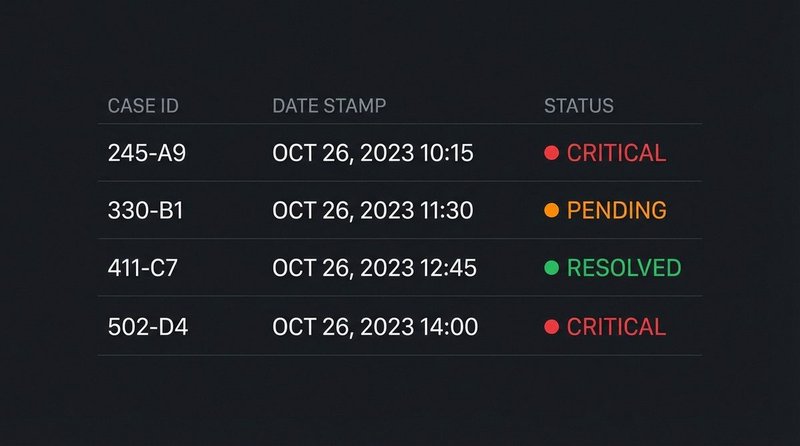
The Fact-Check Tracker covers active and recent misinformation cases — claims currently circulating or resolved within the past twelve months. For older, fully archived cases with confirmed verdicts, use the Fake News Database.
Tracker vs. Database — What Goes Where
The two sections serve different functions and operate on different timelines.
Fact-Check Tracker
- Active and recent cases (last 12 months)
- Some verdicts are provisional (IN REVIEW) while investigation continues
- Updated when significant new evidence emerges
- Covers fast-moving stories where context is still forming
- Cases graduate to the Database once fully documented and resolved
Fake News Database
- Archived cases with final, confirmed verdicts
- Full documentation: claim, spread, evidence, verdict, sources
- Historical record going back to 2014
- Cases have completed their investigation cycle
- Organized by category for research and education use
For research, teaching, or referencing a specific historical case, start with the Database. For current events and recently identified misinformation, the Tracker is more relevant — but note that active cases carry higher uncertainty, and IN REVIEW entries should not be cited as confirmed debunkings.
How Tracker Cases Are Selected
Not every piece of false content online warrants documentation here. Cases are selected based on three criteria: reach (the claim circulated to a significant audience across multiple platforms or countries), impact (the false information caused or has the realistic potential to cause measurable harm), and verifiability (enough independent primary source material is available to evaluate the claim, even if the final verdict is still pending).
Routine social media noise, low-circulation local rumors, and satirical content that did not meaningfully circulate outside its original context are excluded. The focus is on cases where false information reached a scale at which systematic tracking and debunking produces a demonstrable public benefit — and where the documentation serves as a permanent reference point after the story has moved on.
How Tracker Entries Are Structured
Each tracker entry follows the same format as a full database entry: the original claim, the platforms and dates of circulation, an initial evidence summary, and the current verdict status. Entries marked IN REVIEW include a brief note on what evidence is outstanding and what would resolve the verdict. This transparency about process is deliberate — it distinguishes responsible work-in-progress documentation from premature conclusions.
When a tracker case closes, the final entry moves to the Database and the tracker page is updated with a link. This creates a continuous record that follows a case from initial circulation through full resolution.
Current Focus Areas
Two categories currently dominate tracker activity, reflecting the major misinformation vectors of the past year.
Documented Cases from 2024
The 2024 election cycle — which included US presidential, EU Parliamentary, and UK general elections within a single calendar year — produced a significant and well-documented volume of political misinformation. Cases include coordinated inauthentic behavior (CIB) campaigns identified by Meta, Google, and independent researchers, as well as isolated viral claims with no organizational backing. See: Most Significant Debunked Cases of 2024.
AI-Generated Fake News in 2025
Synthetic media cases — AI-generated images, voice clones, and video deepfakes deployed to spread false information — are now a dedicated subcategory in the tracker. The 2025 entries include both technically sophisticated cases and low-effort synthetic media that spread because the claim content was emotionally compelling regardless of production quality. Detection methodology, tool comparisons, and documented examples are compiled in: AI-Generated Fake News in 2025 — Cases, Detection, and What’s Coming Next.
Submit a Case for Review
If you have encountered a circulating claim that warrants investigation, use the contact form on the About page to submit it. Include the original source URL, where you encountered the claim, and any initial evidence you have gathered. All submissions are reviewed; not all enter the tracker.
The most useful submissions include a screenshot or an archived URL (via archive.org or archive.ph) of the original claim. Social media posts are frequently deleted once their falsity becomes public — archived copies make documentation possible after the original is removed.